Browse Exhibits (2 total)
-
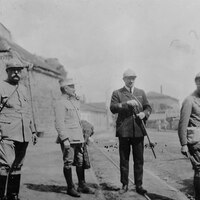
Verdun Forts
A collection of early images and photographs cataloguing the major French fortesses of the late 19th and early 20th centuries surrounding the city of Verdun in Grand Est, France. These fortifications, originally proposed and designed by French military engineer Adolfe Séré de Rivières, formed a defensive "ring" around Verdun. They were intended to protect the city and its inhabitants from invasion while simultaneously detering enemies from attacking the area. As artillery weapons grew more powerful and portable during the leadup to the First World War, many European armies began to change their doctrines and distance themselves from defensive tactics. For the French, this resulted in an almost complete abandonment of the numerous fortresses which they had spent great sums of money constructing during the latter half of the previous century. Not only did this weaken the French fortesses to a point where German forces were able to simply walk in and capture the most prized of them all - Fort Douaumont, but in a stunning reversal of military doctrine, the French fought the longest battle of the war and lost hundreds of thousands of men in order to recapture the very prizes which by their own admission they considered obsolete. This project aims to demonstrate just how strategically important many of these fortifications were in regards to the outcome of the battle, and how the actions of their defenders showcased both the heroism and horror which characterized the First World War.
-
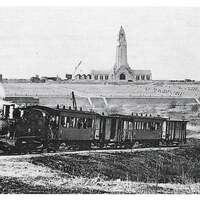
Verdun Monuments
This exhibit is dedicated to places of memory in and around the city of Verdun which relate to the Battle of Verdun and the First World War. Although Verdun was not the deadliest battle of the war, it acquired special significance within French history due to its duration and symbolism of attritional warfare. As an ancient settlement with a history stretching back as far as the Caroligian empire, Verdun was already imbued with a certain national importance by 1916. During the Battle, the city and many of its landmarks were heavily damaged by the endless barrages of German artillery fire. The toll of fighting on civilians devasted the local population and today there are less inhabitants who reside there than before the First World War. During the interwar years, a number of monuments and memorials were commisioned to honor both the fallen soldiers and civilians who gave their lives for France.